What is ESOL, and why Entry 3 does not mean beginner
In the autumn a college adviser looked at your test and said: “You’re Entry 3.” She added that there were no places right now and put you on the waiting list. At home you took “Entry” to mean “beginner”. As far as you could tell, you had been put in the beginners’ group.
You were offended: in Ukraine you had read your work email in English. You did not reply to the college’s letter, and the place went to someone else. Yet Entry 3 roughly corresponds to B1, not A1. You lost the course over one word in a name.
“Is ESOL a course or an exam?”
Both. ESOL stands for English for speakers of other languages, that is, English for people whose first language is something else. The name covers both adult courses and the qualifications (official certificates) you can gain on these courses. When your local council says “sign up for ESOL”, it means exactly this kind of course.
The ESOL Skills for Life qualification is designed for adults aged 16 and over who live in the UK. It has five levels, from Entry 1 to Level 2. Certificates are awarded separately for reading, for writing, and jointly for speaking and listening. So you can hold different levels in different skills.
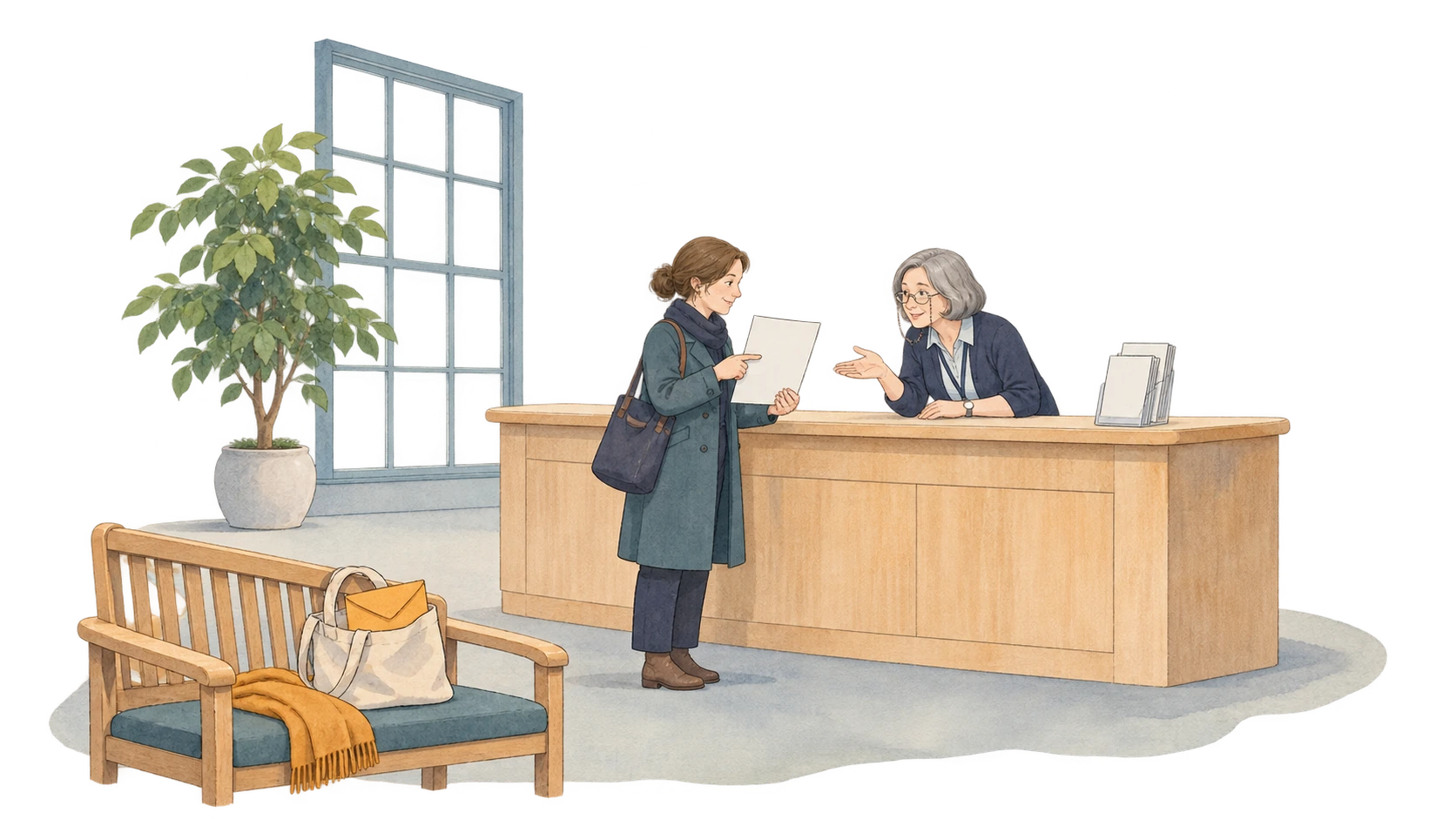
This is how it might sound at college:
Entry 3 is the top of Entry, not the bottom
Entry has three sub-levels: 1, 2 and 3. Your Entry 3 is the highest of them. After it come Level 1 ESOL and Level 2 ESOL. Roughly, they map onto the familiar CEFR scale (A1–C2) like this:
| ESOL level | Roughly on the CEFR |
|---|---|
| Entry 1 | A1 |
| Entry 2 | A2 |
| Entry 3 | B1 |
| Level 1 | B2 |
| Level 2 | C1 |
The trap is in the names. Level 1 sounds like “the first level”, yet it is roughly B2. Level 2 sounds modest, yet it is roughly C1. So find your row in the table first, and only then take offence.
“Am I entitled to a course?”
Most likely, yes. This applies to Ukrainians aged 19 and over who live in the UK under the Ukraine Family Scheme or Homes for Ukraine. They have access to training funded through the adult education budget, ESOL included. Ask your college about places and timetables.
While you wait to hear from the college, look at the STEP programme. It offers online English classes with a teacher and help with finding work, funded by the UK government. It is open to Ukrainians over 18 who live in England. Any of the four Ukrainian visa schemes qualifies, including the Ukraine Permission Extension. Groups are formed by level. The intensive option runs 5 days a week for 10 weeks. The lighter option runs 3 days a week for 24 weeks. The programme is delivered by World Jewish Relief and the British Council.
Note the difference: STEP runs in England, not across the whole of the UK.
You could ask at college like this:
Do not take the comparison table literally
The match “Entry 3 equals B1” is notional; it was not derived from measurement. In 2022 Ofqual, the UK regulator of exams and qualifications, looked at what the certificates really stand for. The pass standard for writing at Entry 3 turned out to be a strong A2 or low B1 at most. At Level 1 it reached a strong B1 or low B2.
What does this mean for you? An Entry 3 certificate in writing does not necessarily mean a solid B1. So do not turn down Entry 3 just because you once passed a B1 exam. And ask for a level for each skill separately:
“There are no places. What do I do while I wait?”
Do not wait in silence. Reply to every letter from the college, ask about STEP and work on your weakest skill. The waiting list does not cancel your learning; it only delays the start of your class.
First, confirm that you are still on the list:
Then check whether STEP suits you. The classes are remote, so you will not have to travel to college.
Next, pick your weakest skill. If it is writing, write one short letter every day. Take the topics from your own week: a doctor’s appointment, a question for your landlord, a delayed delivery. One-to-one lessons with a teacher online will help you keep up that routine with a real person.
Finally, ask to be told if a place comes up sooner:
One phrase that gives a Ukrainian away in the test
In the college test you may be asked how long you have been learning English. In Ukrainian we say «вчу два роки», “I learn two years”, in the present tense. So out it comes: I learn English two years.
For an action that started in the past and is still going on, English uses the Present Perfect, most often the Present Perfect Continuous, and the preposition for. Practise this phrase aloud before you go to college.